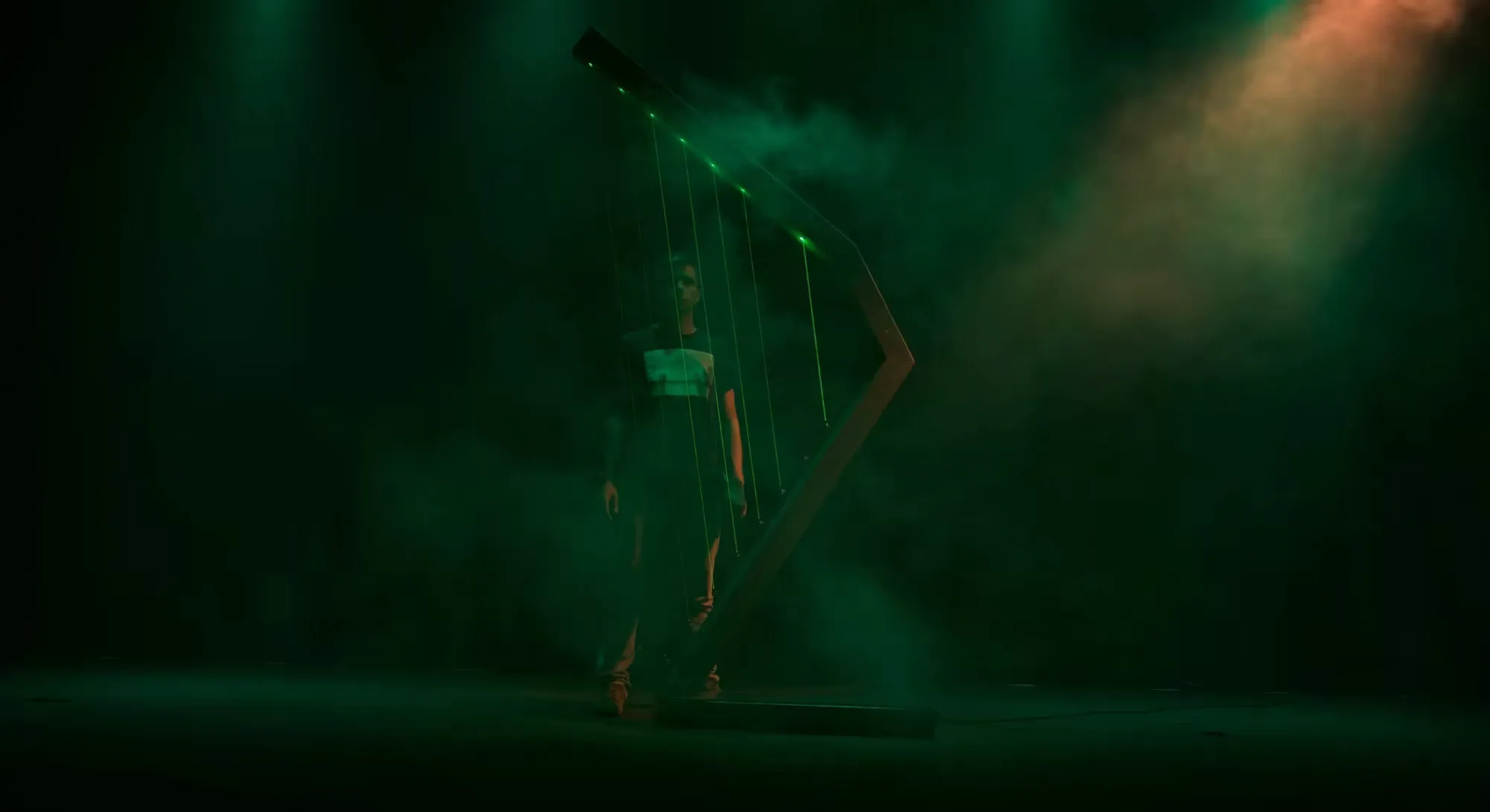
An interface can be an object.
Sitting at a piece of furniture makes you play differently than clicking a window. Software gets a face when you can put your hands on it.
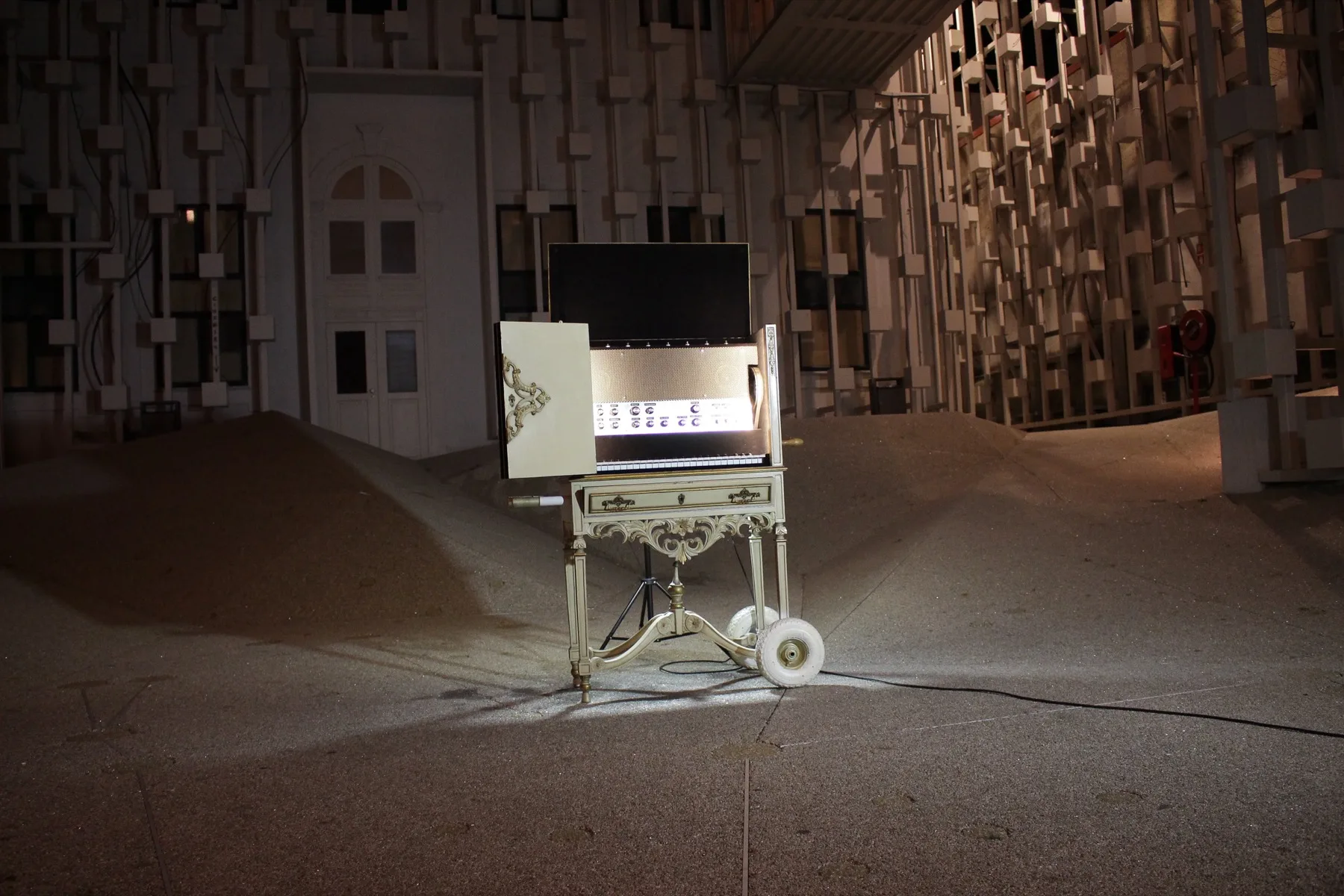
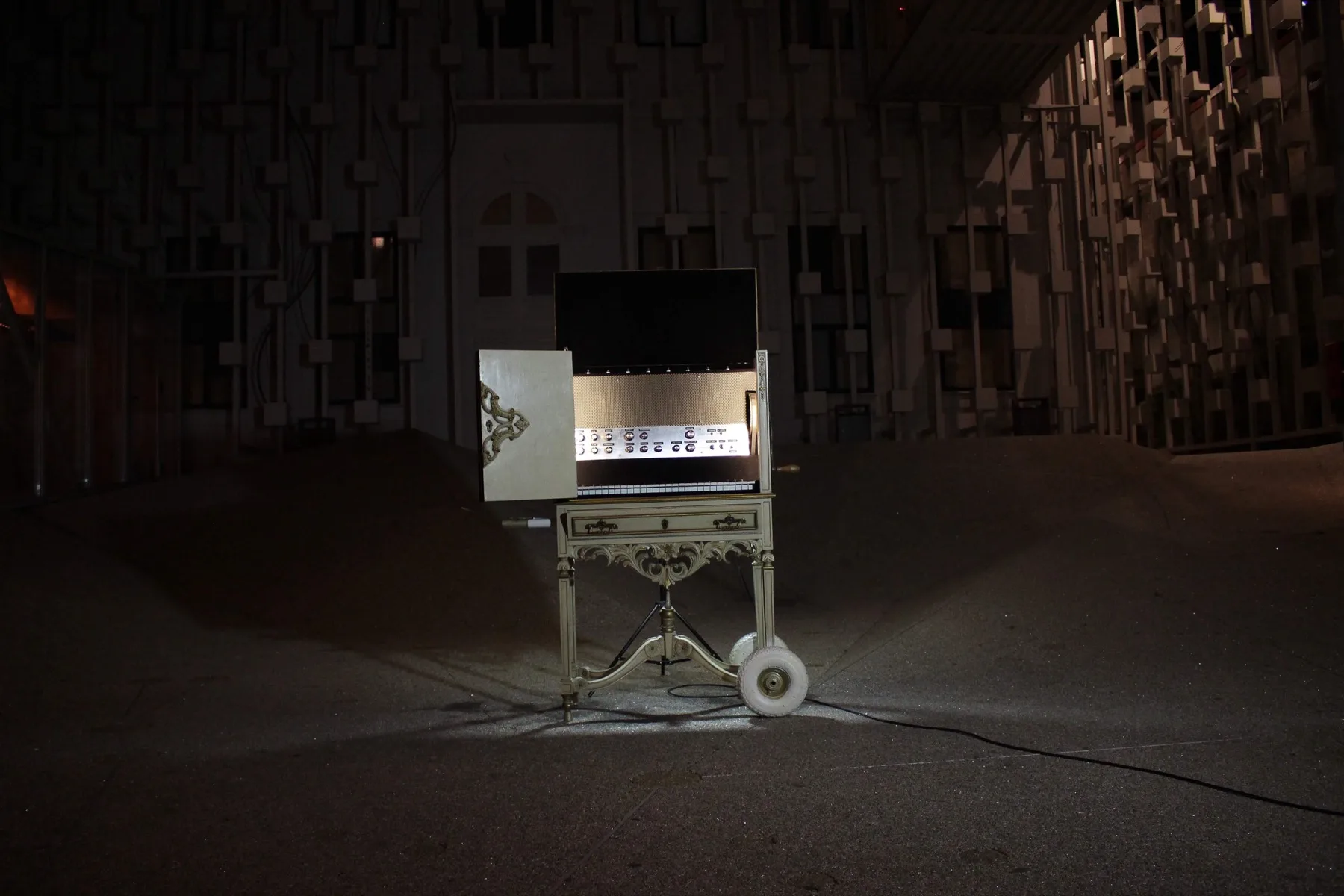
An antique drinks cabinet — one of those old red-velvet home bars, found in an antique shop — cleaned out and rebuilt around the same synth engine we ship as software. Turn the crank, play the keys, and a fully-working DRC answers from inside.
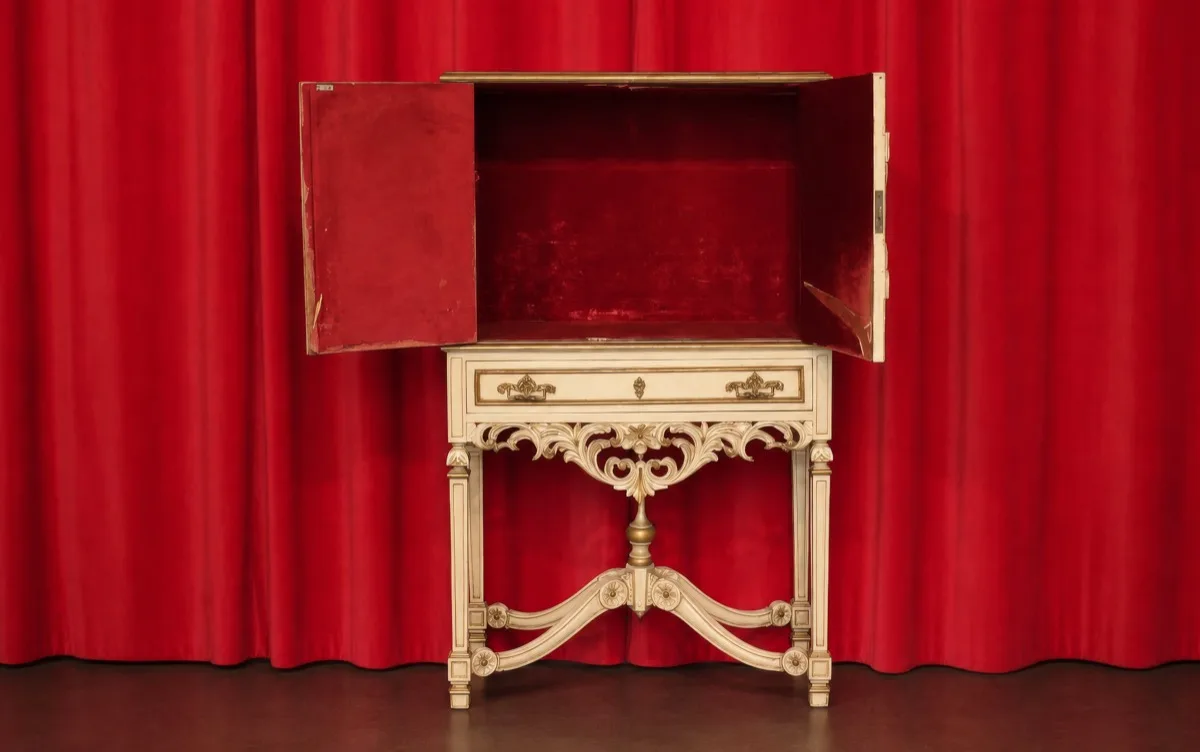
A music box is one of the oldest ways to sequence music: crank a handle, a pinned cylinder turns, and a melody plays itself. We wanted to keep that gesture but change everything behind it. So we found an old wooden cabinet — a home bar lined in red velvet — in an antique shop, cleaned it out, and moved a synthesizer in. Super-sized, retro-futurist, and tuned so anyone can play it — no training, just curiosity.
A wooden drinks cabinet — an old home bar lined in red velvet — rescued from an antique shop. We kept the carved frame, the brass detailing and the wheeled feet, and emptied the inside to make room for the electronics.
The one gesture we kept from a real music box. Turning the handle drives the clock — faster or slower, the music follows your hand. Stop turning and it waits.
A keyboard under the lid triggers the notes; a row of front-panel knobs shapes the voice live — filter, delay, reverb. Everything happens in front of you, nothing hidden in a menu.
The same synth engine that ships in our DRC app, running on a Raspberry Pi with a Pisound audio card by Blokas. Whatever DRC can synthesise, the box can play.
Amplifier, subwoofer and drivers built into the case, so the cabinet carries real weight in the open air — enough bass to crank out anything from Mozart to Metallica.
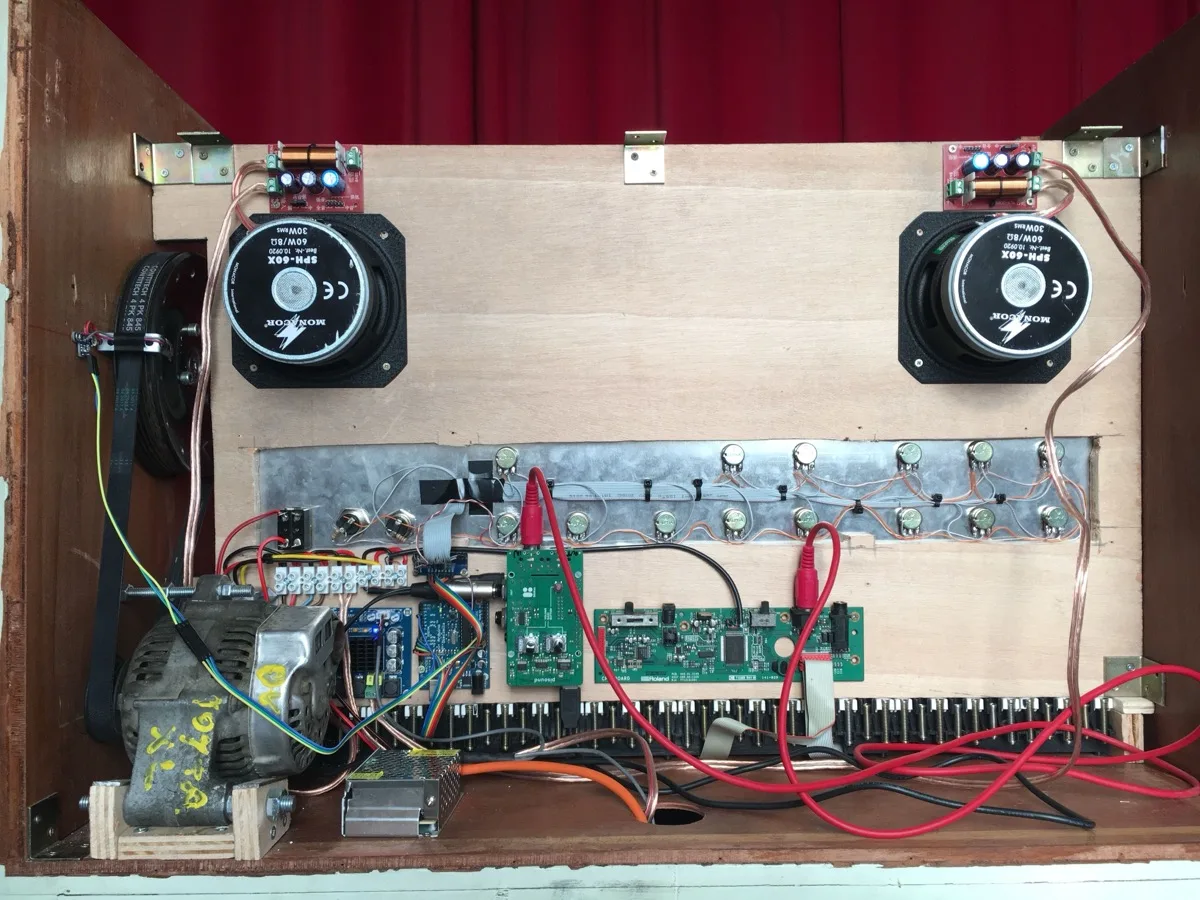
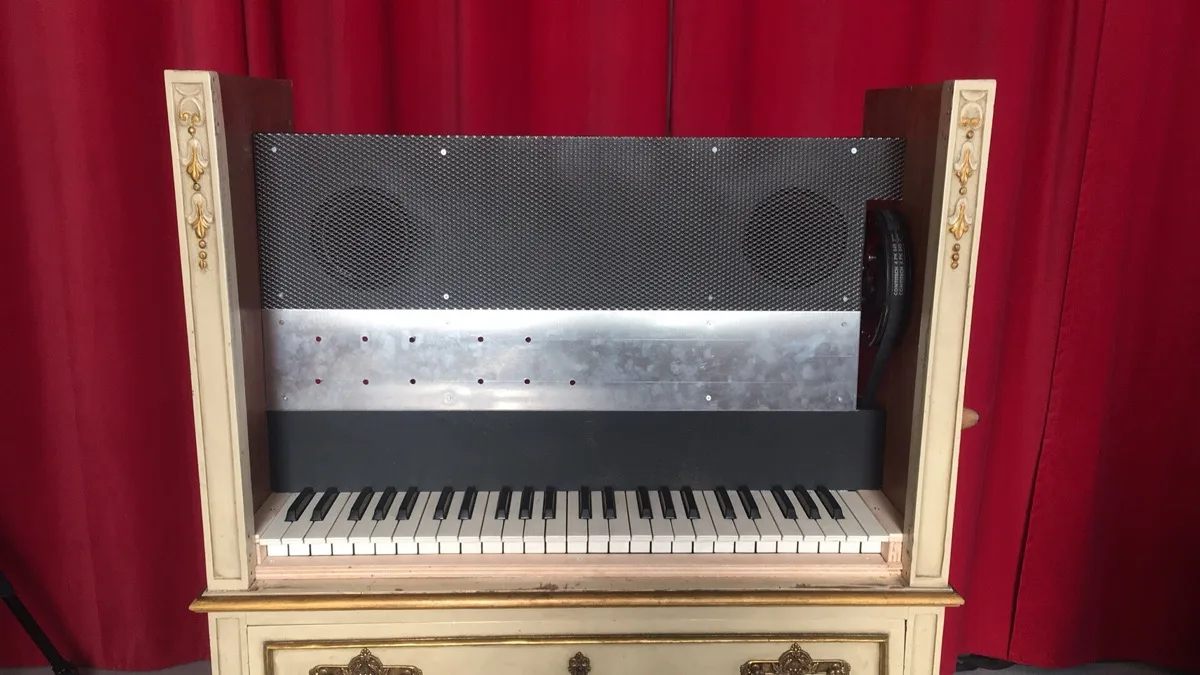
"We kept the gesture of a music box — you still turn a crank — and changed everything behind it. The furniture does the rest."
— Nuno Santos · Imaginando
The voice is DRC, but the cabinet colours it. The old wood, the panels, the open lid — the whole case joins in, the way it was built to when it held bottles instead of a synth.
That is the point of putting a synthesizer inside furniture. It stops being a screen and becomes an object you walk up to and play — no musical training required, just a hand on the crank.



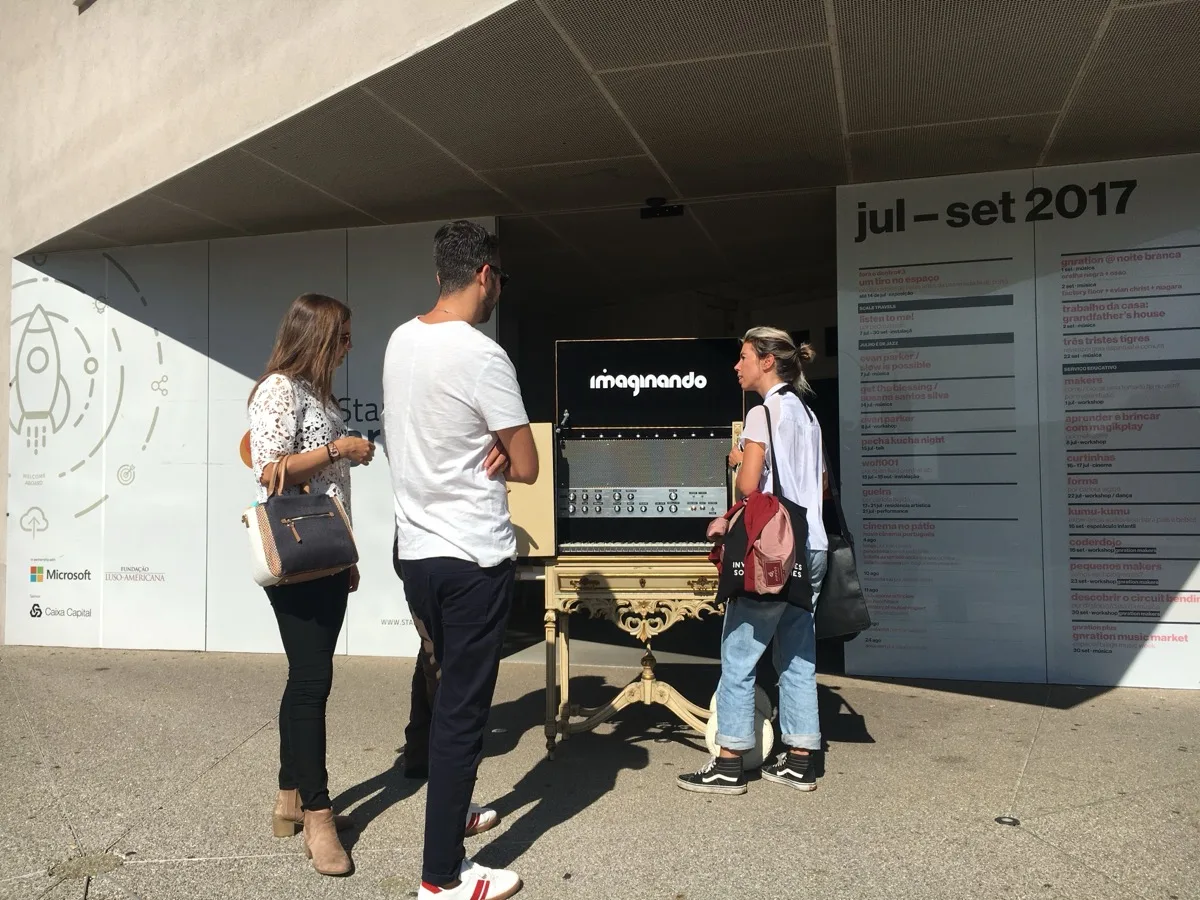
Sitting at a piece of furniture makes you play differently than clicking a window. Software gets a face when you can put your hands on it.
Tuned so a stranger or a child could never hit a wrong note. That idea — a smart default that stays out of your way — runs through everything we've shipped since.
Documenting the whole thing as thirteen episodes was a step outside our comfort zone — and the best way we've found to share how a thing is actually made.